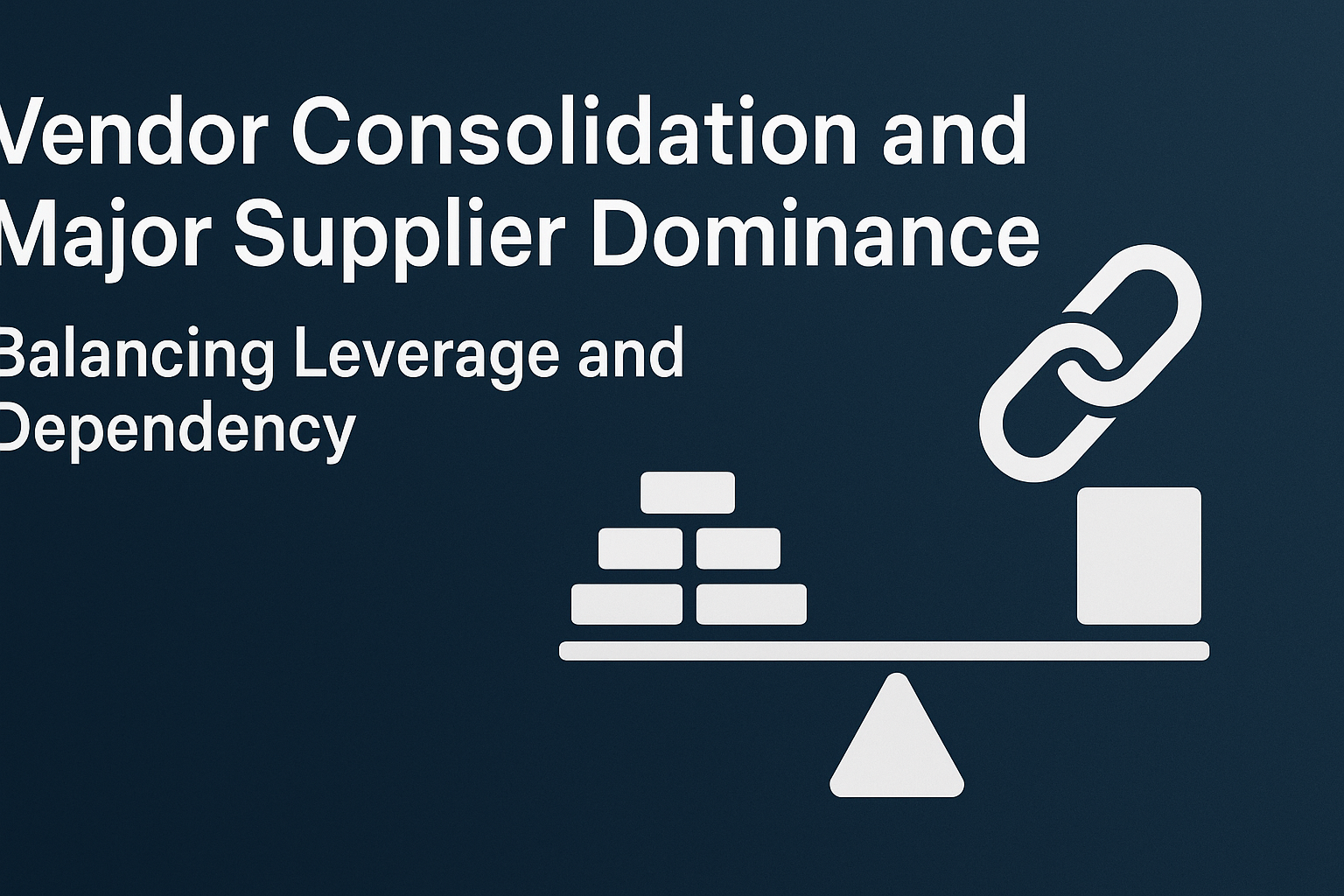
Vendor Consolidation and Major Supplier Dominance: Balancing Leverage and Dependency
Consolidation Is Reshaping IT Spend
Enterprises are concentrating more IT spend with fewer suppliers as part of a vendor consolidation strategy. Two-thirds of large companies now allocate most of their IT budget to fewer than 25 vendors.
This streamlining of the enterprise vendor portfolio promises simpler supplier management and potential volume discounts. By funneling more business to a small set of strategic suppliers, organizations expect better pricing and deeper partnerships.
However, this simplicity comes at a cost. When a handful of vendors hold the lion’s share of your IT spend, those suppliers gain significant influence.
Procurement leaders need to manage both the benefits and the risks. IT supplier consolidation can deliver operational efficiency, but it also shifts negotiating power toward those major vendors.
Read our strategic guide, IT Vendor Negotiation Trends 2026: Strategies for a Shifting Enterprise Market.
The Problem – Fewer Vendors, Less Competition
Reducing the number of vendors can lower administrative overhead, but it also risks eroding negotiation leverage. If a supplier knows they’re indispensable – because you’ve consolidated and they face little competition – their incentive to offer discounts or flexible terms fades.
Over time, dependency becomes the hidden cost of this simplicity. What you save in management effort, you might lose in pricing power.
Many organizations intentionally trim their supplier lists as part of strategic supplier management initiatives. But without careful balance, this effort can backfire. Excessive consolidation gives dominant vendors pricing control.
With less competition for your business, a major supplier can become complacent or unresponsive, knowing you have few alternatives.
In extreme cases, vendor dominance may lead to unfavorable contract terms and slower innovation, as the supplier feels secure that your company is locked in.
To weigh the trade-offs clearly, consider the benefits and risks of vendor consolidation side by side:
| Potential Benefits of Consolidation | Potential Risks of Consolidation |
|---|---|
| Simplified vendor management and oversight. | Over-reliance on a few suppliers (single points of failure). |
| Volume pricing discounts due to larger spend per vendor. | Reduced competitive pressure can lead to higher costs over time. |
| Closer strategic partnerships with key vendors. | Loss of access to niche or innovative solutions from smaller players. |
| Streamlined procurement processes (fewer contracts and invoices). | Vendor lock-in, making it harder to switch if performance falters. |
| Better consistency and standardization across the enterprise. | Less bargaining power as vendors realize they have a captive client. |
Step 1 – Recognize the Double-Edged Sword of Consolidation
Consolidation brings scale, but it also concentrates risk. The first step is to acknowledge that vendor consolidation is a double-edged sword. Use the scale of your combined spend to negotiate better terms—for example, push for cross-product discounts or rebates that cover all the business you do with a supplier. An enterprise-wide agreement can leverage your total buying power across all divisions to win concessions that wouldn’t be possible in smaller deals.
At the same time, preserve your flexibility. Ensure contracts include provisions that allow you to exit or scale down if needed, despite the consolidation. Avoid overly restrictive agreements that trap you with a single vendor. Maintaining some competitive tension – even between your strategic vendors – is critical.
In practice, that means continuing to compare offerings, watching the market, and reminding your major suppliers that alternatives exist. Recognizing both the advantages and dangers upfront sets the tone for a balanced consolidation approach.
Soft values in negotiations, ESG and Ethical Considerations in IT Contracts: Aligning Vendor Deals With Corporate Values.
Step 2 – Build Enterprise-Wide Leverage
Large vendors value having a greater “share of wallet” in your business. Use that fact to your advantage. Bundle and coordinate spending across the enterprise when negotiating with a major supplier. Instead of separate, smaller contracts by department or region, combine them into one negotiation to maximize volume.
This approach can unlock better global terms and pricing. For example, link discount tiers to your total spend commitments: the more you buy enterprise-wide, the bigger the discount for every business unit.
By deliberately consolidating spend, you turn your vendor’s desire for more business into a bargaining chip. This enterprise-wide leverage ensures that consolidation yields tangible savings, not just convenience. However, be sure to also negotiate flexibility into these agreements as a safety valve.
For instance, include clauses that allow adjustments if certain divisions reduce usage or if a competitor offers significantly better technology. The goal is to gain the pricing benefits of being a big customer without giving up control.
Step 3 – Keep the Long Tail Alive
Don’t eliminate all your smaller or niche suppliers. Keeping a “long tail” of secondary vendors alive is an insurance policy against complacency. These alternative providers create competitive pressure, even if they represent only a small portion of your spend. For example, maintaining a contract with a niche software vendor or a second cloud provider—even at minimal usage—signals to your primary vendors. It shows that you have alternatives ready.
This strategy pressures large vendors to stay fair on pricing and service. They know that if they underperform or overcharge, you have somewhere else to turn. Investing a little in a backup or niche supplier can protect millions in your main contracts by keeping the dominant vendor honest. In essence, a diversified vendor portfolio, with a managed long tail, mitigates the risk of putting all your eggs in one basket.
Step 4 – Maintain Cross-Vendor Competition
If you consolidate, consider doing it in pairs. In every strategic category – be it cloud infrastructure, ERP systems, collaboration tools, or analytics platforms – try to keep at least two major suppliers in play. Make sure each knows the other is still an option.
Even if one vendor gets the lion’s share of business, knowing a competitor is waiting in the wings curbs any temptation to inflate prices or slack on service.
For example, you might run primarily on one cloud platform but also maintain some workloads on a second provider. In negotiations, you can reference the alternative (“we can always shift more workload to Vendor B if needed”).
This cross-vendor competition, even if somewhat symbolic, maintains pricing discipline. Vendors are far less likely to take a hard line on contract terms if they know a rival is always a viable Plan B.
The key is to cultivate at least a dual-sourcing approach in critical areas, so no single vendor ever feels irreplaceable.
Step 5 – Negotiate Strategic Partnership Terms, Not Just Discounts
When dealing with a dominant supplier, move the conversation beyond just pricing. Negotiate like a strategic partner, not just a customer. This means including terms in your agreements that drive mutual value. For instance, seek a joint innovation roadmap – have the vendor involve your team in beta programs or co-develop new features that align with your needs. You might also negotiate for priority support, dedicated account teams, or performance incentives (like service credits if uptime targets are missed).
By focusing on partnership terms, you encourage the supplier to invest in your success rather than simply lock in your spend. However, remain slightly skeptical even in partnership mode: include clauses that preserve your independence. Ensure you have clear exit criteria or the ability to bring in other providers for certain projects.
In other words, enjoy the benefits of a close partnership – such as influence and early access – but keep options open. A true strategic approach balances collaboration with contingency plans.
Five Actionable Strategies for Managing Vendor Consolidation
To put these principles into practice, consider the following five actionable strategies that balance consolidation benefits with risk mitigation:
- Map Spend Concentration Annually: Regularly review where your IT budget is going. Identify if two or three vendors control an outsized percentage (for example, 70% or more of total spend). If so, recognize that your leverage with those suppliers needs active oversight and risk management.
- Negotiate Multi-Tier Relationships: Structure deals that combine global volume pricing with local flexibility. For example, sign an enterprise-wide agreement for discounts, but include regional or business unit clauses that allow adjustments. This multi-tier approach captures scale benefits while preserving agility for parts of the organization.
- Set Competitive Anchors in Every Category: Maintain at least one credible challenger in each key domain (cloud, ERP, security, etc.). Even a smaller competitor or secondary supplier in the mix can keep your primary vendor more honest. Competitive anchors ensure no category becomes a sole-source monopoly.
- Include Exit and Rebalance Clauses: In major contracts, build in rights to shift or reduce spend if certain conditions aren’t met. These could be performance failures, price increases, or market changes. Having exit and rebalancing clauses turns dependency into dynamic leverage – vendors know you can redistribute spend if needed.
- Use Data to Reinforce Negotiation Power: Leverage benchmarks and performance data in every vendor discussion. Track metrics like cost per unit, service levels, and renewal trends across your vendor portfolio. Presenting hard data (e.g., showing how a supplier’s pricing or performance compares with peers) strengthens your position. Major vendors respect data-driven arguments, and this signals that you are closely monitoring their value.
By applying these strategies, CIOs and procurement leaders can pursue consolidation without surrendering control.
The key is balance. Consolidate to the point where you gain efficiency and volume advantages, but not so much that you cannot walk away or bring in a competitor when necessary.
In the end, a successful vendor consolidation strategy lets you capture savings and simplicity while actively managing vendor risk and leveraging vendor relationships.