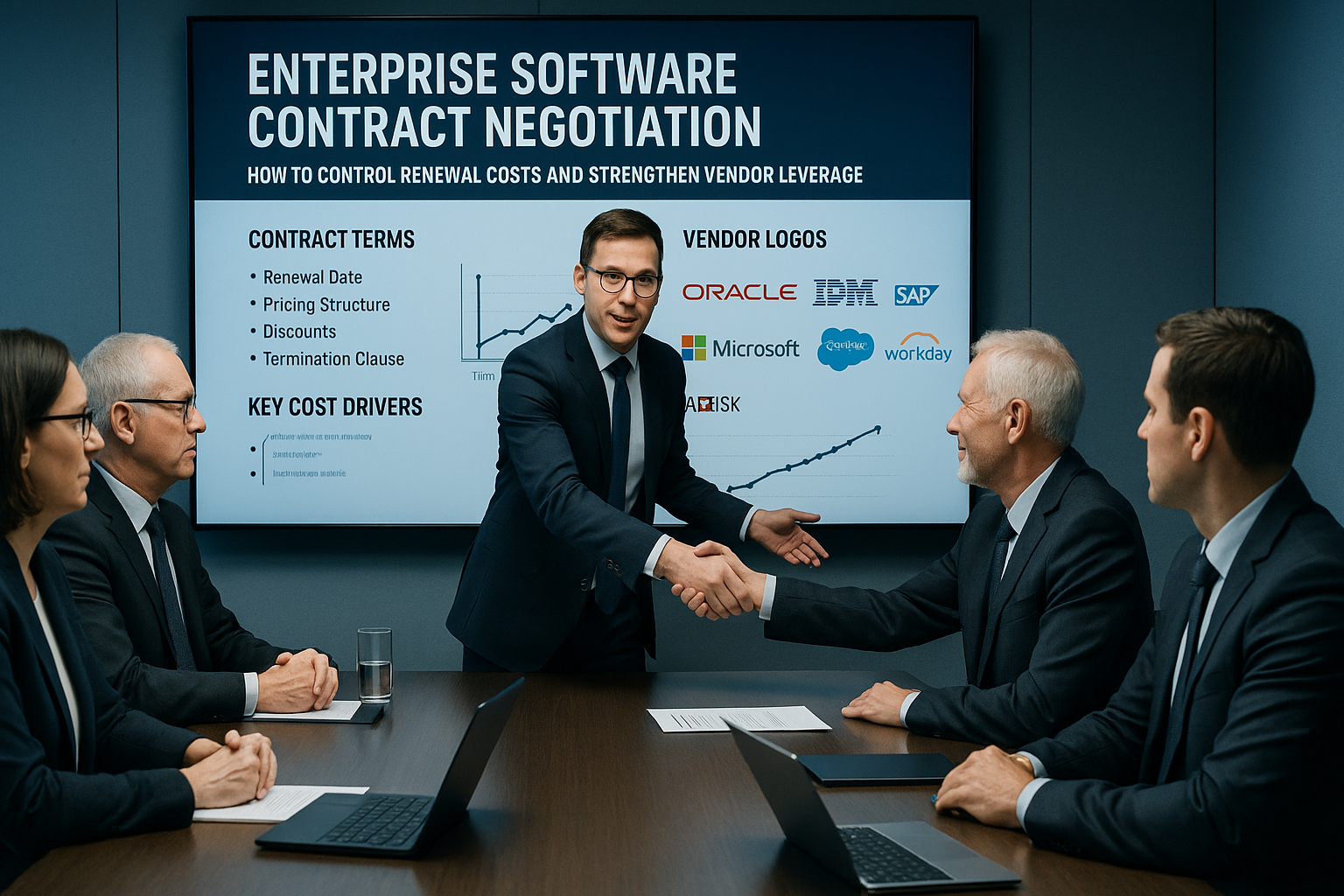
Renewals don’t have to be dreaded budget-busters. With the right approach, a software contract renewal strategy can actually save money and secure better terms.
Too often, enterprise software renewals are treated as routine paperwork at the last minute – and vendors take full advantage. This article shows how to flip the script on renewals, turning them from reactive cost events into proactive savings opportunities.
We’ll explain why waiting until the last minute favors the vendor, how to align the software true-up process with real usage data, which negotiation tactics prevent double-digit cost hikes, and how proactive planning gives you leverage to reduce software renewal costs. Let’s dive in.
For a deeper understanding, read our ultimate guide, Enterprise Software Contract Negotiation – How to Control Renewal Costs and Strengthen Vendor Leverage.
Why Software Renewals Create Cost Spikes
Renewals are the moment when vendors try to reclaim lost margin. In initial deals, vendors often offer discounts to win your business. At renewal time, they aim to raise prices or upsell to offset those discounts. Most enterprises inadvertently help the vendor by handling renewals reactively—typically scrambling to review the contract just a few weeks before it expires.
That delay gives the vendor complete control. With the clock ticking, buyers feel pressure to accept whatever terms are on the table. It’s common to see auto-renewal clauses or “standard” price increases of 10–20% go unchallenged simply because there isn’t time to push back.
Those cost spikes hit your budget even though many could have been negotiated down or avoided with preparation.
The key insight: Renewal success isn’t about the last-minute signature – it’s about controlling the months before it. By starting renewal planning early and gathering your data, you prevent the vendor from dictating the narrative. You can approach the renewal with a strategy rather than reacting to a deadline.
The importance of negotiating the terms, Negotiating Licensing Terms and Conditions – How to Avoid Costly Software Contract Pitfalls.
The Hidden Risks of Last-Minute Renewals
When renewals are handled in panic mode, several things typically go wrong:
- Vendor-Driven Timeline: The vendor sets tight deadlines and dictates the renewal timeline, forcing rushed decisions.
- Internal Misalignment: Your internal teams (IT, finance, procurement, legal) aren’t on the same page, leading to conflicting priorities or overlooked needs in the renewal.
- Usage Visibility Gaps: You lack clear data on license usage or needs, so you end up overpaying for unused licenses or unnecessary features.
By renewal day, any negotiation leverage you had is effectively gone. The result is that the renewal becomes a financial rollover – essentially rubber-stamping the existing contract (often at a higher cost) – rather than a true deal with improvements. Last-minute renewals always favor the vendor.
What Is a True-Up and Why Does It Matter
A true-up is a reconciliation between the licenses you contracted for and what you actually used.
In theory, the software true-up process is about ensuring compliance and fairly adjusting costs. In practice, however, the true-up is often a cost trigger that vendors use to boost your bill.
Without a proactive approach, the vendor defines the true-up on their terms. That can mean you pay for:
- Inactive accounts: Licenses allocated to users who no longer use the software (or have left the company).
- Outdated environments: Old test or development environments running licenses that aren’t actually needed.
- Inflated usage estimates: Vendor’s assumptions of usage that don’t match reality.
If you haven’t audited your own usage, you might end up accepting the vendor’s numbers and paying for shelfware or overestimated consumption.
A smart renewal strategy treats the true-up as an opportunity to validate and correct the record—not as a revenue opportunity for the vendor. In other words, you take control of the true-up so it reflects actual usage, not anything more.
After the contract is signed, how to manage the life-cycle, Post-Contract Vendor Management and Compliance – How to Maintain Control After Signing.
How to Audit Software Usage Before Renewal
Start your renewal prep early—ideally 6 to 9 months before the contract expires. This lead time is crucial for data gathering and analysis.
Begin by auditing your current software usage.
Key steps include collecting:
- Active user counts from system logs: Get actual login or usage data to see how many people truly use the software regularly.
- License allocations vs. actual usage: Identify how many licenses you have assigned versus how many are actually in use. This helps spot over-allocation (licenses deployed but not actively used).
- Environment segmentation: Break down usage by environment (production, test, staging, etc.). You might find, for example, dozens of licenses tied up in a staging environment that’s rarely active.
- Department-level ownership: Understand which business units or departments hold which licenses and whether they are fully utilizing them.
Cross-check all this information against your contract entitlements (what you’re paying for).
The goal is to surface shelfware, over-provisioned licenses, and inactive users well before the vendor’s true-up or renewal conversation.
Put simply: internal audits uncover savings, whereas vendor-led audits uncover penalties. Knowing your actual usage helps you avoid paying for unused services and ensure you only renew what you need.
Building a Software Renewal Strategy
Armed with data, you can build a structured enterprise software renewal planning strategy instead of winging it.
A strong renewal strategy includes several components:
- Timeline Control: Start early so you’re never negotiating under last-minute pressure. Set internal milestones leading up to the renewal date.
- Data Accuracy: Base the renewal scope on verified usage data (from your audit) rather than vendor estimates or outdated allocations.
- Benchmarking: Compare the vendor’s pricing and discount levels to current market rates or similar deals your peers have made. This prevents blindly accepting an overpriced quote.
- Internal Alignment: Get finance, IT, procurement, and legal on one page with clear goals. Everyone should understand the plan—for example, finance understands why you’re removing certain licenses, IT understands the cost implications of features, etc.
- Negotiation Framework: Set your negotiation game plan in advance. This means defining target outcomes (e.g., 15% cost reduction or adding certain features at no extra cost), acceptable fallback positions, and non-negotiables (like a price cap clause).
Putting these pieces in place transforms the renewal into a managed project rather than a chaotic scramble. Renewal preparation builds leverage. Vendors will sense immediately when a customer has done their homework and has a united team – it changes the tone of the negotiation in your favor.
Using True-Up Data as a Negotiation Tool
Think of your true-up analysis as negotiation currency. It’s the evidence you bring to the table.
When you can demonstrate, for example, that only 70% of the licenses are actively used, or that usage in certain areas is declining, you shift the power dynamics of the negotiation.
Here’s how you can use true-up data to your advantage:
- Remove or reduce unused licenses: If your data shows 100 unused licenses, you can confidently cut them from the renewal and avoid paying for them in the future.
- Push for lower pricing tiers: Evidence of lower usage can justify moving to a lower (cheaper) pricing tier or subscription plan that better fits your actual consumption.
- Negotiate volume adjustments or discounts: Use usage trends to argue for a discount. For instance, if your headcount in a certain software dropped 15%, request a corresponding cost reduction or discount on the renewal.
- Seek credits for overpayments: If you discover you’ve been over-licensed (paying for more than you used), bring it up. You can request a one-time credit or concession to address that historical overspend.
The key point is that vendors rarely volunteer savings. They won’t say, “Oh, you didn’t use these licenses, let’s reduce your bill.” But when you present clear evidence, they are forced to respond. Back your requests with hard data to make it difficult for a vendor to justify a large price increase or refuse reasonable adjustments. In a software renewal negotiation, facts and figures speak louder than general pleas for a better deal.
Negotiating Price Caps and Renewal Concessions
One of the simplest and most effective cost-control tools in a renewal is the price cap.
Always negotiate to include a price cap or rate protection in your agreement. For example, you might cap annual price increases at 3–5% for the duration of a multi-year contract.
This prevents the vendor from hitting you with surprise double-digit hikes each year.
Beyond price caps, consider other renewal concessions that add flexibility:
- Annual increase limits: As noted, insist on a maximum percentage (e.g., 5%) by which the subscription or maintenance fee can increase each year. This keeps costs predictable.
- Volume flexibility: Negotiate the right to reduce license counts or subscription quantities at certain intervals without penalty. If your user count drops or you consolidate systems, you shouldn’t be forced to pay for unused licenses until the term ends.
- Recalibration rights: Include a clause stating that if the vendor changes its licensing model or product bundles, you have the right to renegotiate pricing or migrate to the new model on favorable terms. This protects you from being stuck on an outdated, expensive plan while new customers get a better deal.
Every renewal should include a cost ceiling and a flexibility clause. Without these protections, what vendors call “price predictability” often turns into guaranteed inflation. Make sure your contract has guardrails so that, even if usage grows, you won’t be blindsided by costs that grow even faster.
Aligning True-Ups With Budget Cycles
Part of a good software contract renewal strategy is aligning the contract terms with your company’s financial rhythm.
Renewal pain often stems from bad timing – many vendors set true-up and renewal dates to align with their fiscal year, which might not align with your budgeting cycle. This misalignment can lead to unpleasant surprises (like a huge true-up invoice hitting after budgets are locked).
Where possible, restructure your true-up and renewal timing to align with your budgeting and planning cycle. For example:
- Sync with fiscal calendars: Align license true-up dates with your organization’s fiscal year or quarter. That way, your team can plan for any adjustments within the normal budget process.
- Advance visibility: Ensure that procurement and finance teams get visibility into renewal costs well before invoices arrive. If your renewal is due in Q4, start sharing preliminary cost projections in Q2 or Q3 budget meetings.
- Forecast increases: If a price increase is anticipated, forecast it and have it approved by leadership early. It’s much easier to get buy-in for a known 5% increase six months out than to ask for emergency funds at the last minute.
This may require negotiating contract date changes or custom true-up schedules, but it is worth it. These small timing tweaks transform renewals from reactive firefights into planned events. When renewals coincide with your budget cycle, you can handle them methodically with no panic.
Coordinating Legal, Finance, and IT Before Negotiation
A renewal negotiation can fall apart if your own house isn’t in order. Internal coordination is key. Often, deals fail to deliver savings because different departments approach the renewal with different agendas or knowledge gaps:
- Legal focuses on contract terms and compliance but might not grasp the pricing or usage implications.
- Finance approves budgets and cuts the check, but might not know if the licenses being paid for are underused or redundant.
- IT manages the technology and knows what features or user counts are needed, but they might not be versed in contract fine print or vendor tactics.
If these teams work in isolation, a vendor can exploit the gaps. The solution is to form a single renewal “steering team” well ahead of negotiations. Bring legal, finance, IT (and procurement, if you have one) together to share information and set a unified strategy.
For example, legal can flag any risky contract clauses, IT can provide usage data, and finance can set the budget guardrails. With everyone coordinating, your organization presents one consistent position to the vendor.
The result of this unity is leverage. A vendor is far less likely to push unfavorable terms if they see the customer’s team is coordinated, well-informed, and prepared to walk away from a bad deal. Unified negotiation equals unified leverage.
5 Actionable Renewal and True-Up Strategies for Enterprises
Finally, let’s summarize with concrete actions. Here are five actionable strategies any enterprise can apply to turn renewals into cost-saving opportunities:
- Run Mid-Term License Audits. Don’t wait for the end of the contract – review your license entitlements and usage at least quarterly or mid-term. Regular check-ups prevent last-minute surprises and give you time to address any discrepancies or inefficiencies before renewal.
- Eliminate Shelfware Before Renewal. Identify and remove (or reassign) inactive accounts and unused licenses well in advance. You shouldn’t be paying maintenance or subscription fees for “ghost users” or software that nobody is using. Cleaning this up before negotiating ensures you’re only renewing what provides value.
- Negotiate Renewal Caps in Every Contract. As a standard practice, include caps on price increases with every software agreement. For instance, a clause that limits annual renewal price hikes to 5%. Make sure these caps are binding and clear. It’s a simple step that can save huge sums over multi-year deals by preventing unchecked increases.
- Use Benchmarking to Challenge Renewal Quotes. When a vendor presents a renewal quote (especially if it includes a cost increase), compare it against current market data or benchmarks from peers and industry research. If you know other companies got a 20% discount or are paying less per license, bring that up. Benchmarking data is a powerful rebuttal to an inflated renewal price.
- Document Renewal Outcomes for Future Leverage. After each renewal negotiation, document what was agreed: the pricing terms, any concessions, and even the tactics the vendor used. This creates an internal knowledge base. Next time, you’ll know their playbook and have a record of commitments. Over multiple renewal cycles, this info helps you push for even better terms and avoid past pitfalls.
Each of these actions might seem small on its own, but they compound. Over multiple renewals, they create structural cost discipline and a culture of proactive contract management. Instead of treating renewals as unavoidable cost bumps, you’ll treat them as opportunities to optimize your software licenses and spending.
By following these renewal and true-up strategies, CIOs and sourcing leaders can confidently turn the tables on software vendors. The next time a big renewal is on the horizon, you won’t be scrambling – you’ll be executing a plan that turns a potential cost spike into a savings win.