Why Software Negotiation Planning Determines the Outcome
It’s often said that 80% of a negotiation’s outcome is decided before the first meeting. Too often, companies rush into talks under a vendor’s timeline with no clear plan. They aren’t even sure of their own needs or internal decision-makers, which lets the vendor frame the conversation to their advantage.
Without well-defined requirements and a solid game plan, you risk giving up control from the outset. Planning is where negotiation power is built. When you structure your approach before the first pricing call, you set the terms of engagement and keep leverage on your side.
Make sure your internal objectives, team roles, and data are sorted out before the first quote arrives – rather than scrambling after the vendor has already put numbers on the table.
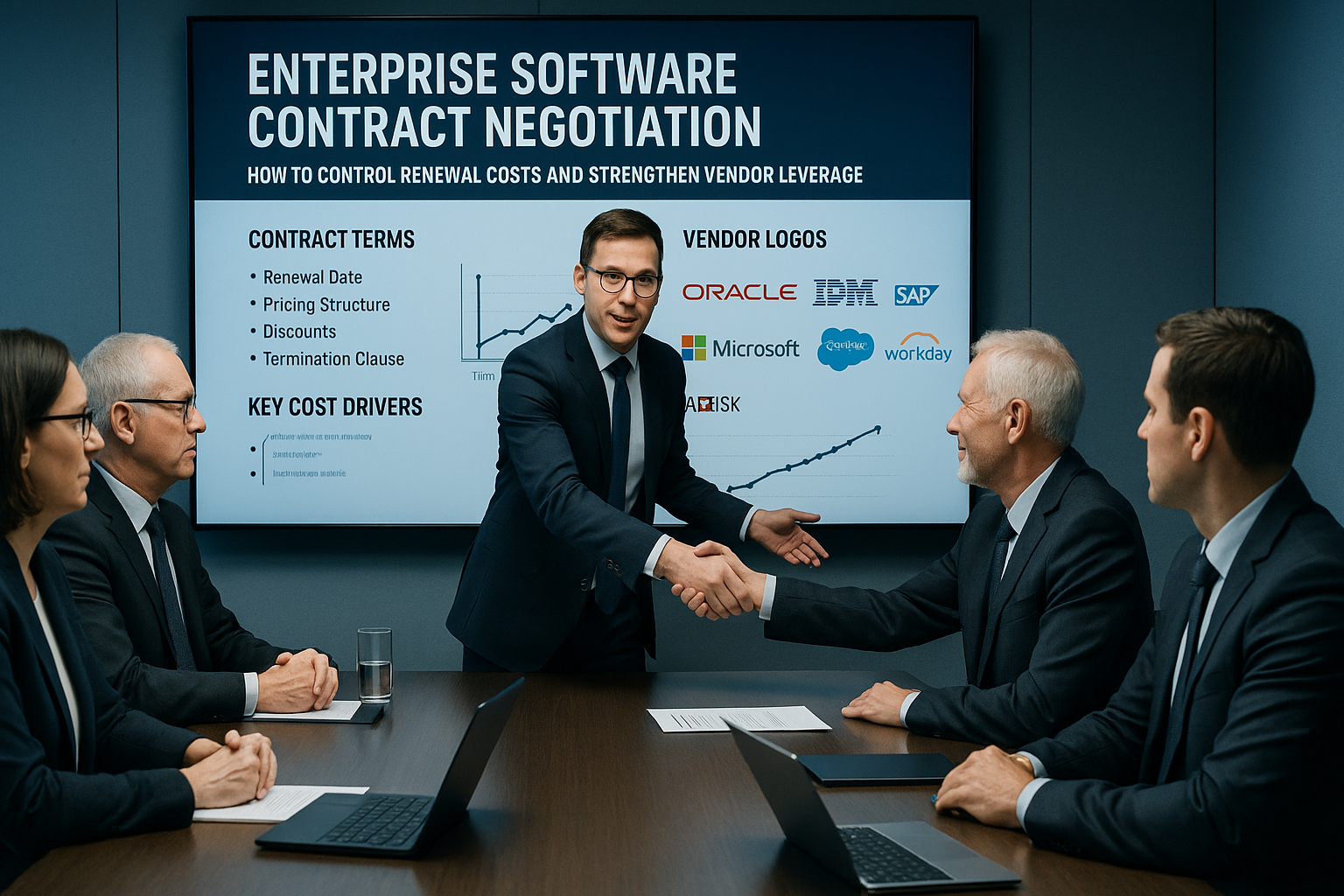
For a deeper understanding, read our ultimate guide, Enterprise Software Contract Negotiation – How to Control Renewal Costs and Strengthen Vendor Leverage.
The Cost of Skipping Planning
When teams jump straight into vendor discussions without proper preparation, they often encounter problems like:
- Uncoordinated concessions: Team members make pricing or contract concessions without full internal alignment on limits.
- Vendor-driven timelines: Renewal deadlines get dictated by the vendor’s urgency, forcing your team to rush decisions.
- Shifting requirements & mixed messages: Without clear internal alignment, your needs may shift mid-negotiation, and stakeholders might even contradict each other in front of the vendor, undermining your position.
Result: Lost leverage, missed savings, and a deal shaped by the vendor’s priorities instead of yours.
Step 1 – Define Business and Technical Requirements
Start by translating your business goals into specific software requirements. Knowing exactly what you need (and what you don’t) keeps the vendor from trying to upsell extras.
Include in your requirements document:
- Core capabilities: The essential features the software must have for your operations.
- Optional features: Nice-to-have extras that aren’t critical.
- Integration needs: Compatibility with your existing systems and data.
- Scalability: Capacity to handle future growth in users or usage.
Document all these needs early. Vendors love ambiguity – if you’re not specific, they can push features you didn’t ask for. A clear requirements list keeps the conversation focused only on what truly matters to your business.
Step 2 – Establish Negotiation Objectives
Define what a “successful” deal means for your organization. These negotiation objectives will guide your strategy and priorities during the talks.
Your objectives might include:
- Lower total cost of ownership (TCO), e.g., by reducing the overall multi-year cost of the software.
- More flexible contract terms: Perhaps a shorter commitment or better exit options.
- Standardized pricing: Ensure all business units pay the same rate.
- Improved support: Stronger service commitments or support levels from the vendor.
Prioritize these objectives to identify your top goals. Every negotiation has trade-offs, and being clear on priorities prevents confusion later.
Step 3 – Define Must-Haves, Negotiables, and Walk-Away Points
Before you engage with the vendor, sort your requirements and terms into three buckets:
- Must-haves: Non-negotiable terms or features you absolutely require.
- Negotiables: Areas where you have flexibility if your top priorities are met.
- Walk-away points: Conditions that would cause you to walk away from the deal.
This structure keeps your team disciplined under pressure. If a salesperson pushes you to “just sign today,” everyone knows the limits and can resist making emotional decisions.
Step 4 – Build Your Negotiation Team
Major software negotiations require a team effort. Assemble a cross-functional team (and clearly define each person’s role) so all angles are covered. Typical roles include:
- Procurement Lead: Coordinates the process and documentation.
- IT Lead: Validates technical requirements and usage data.
- Finance Lead: Manages budgets and financial analysis of proposals.
- Legal Advisor: Reviews contract language and limits risk.
- Executive Sponsor: Provides high-level support and approval for major decisions.
Make sure responsibilities are crystal clear from the start to avoid any internal confusion that the vendor could exploit.
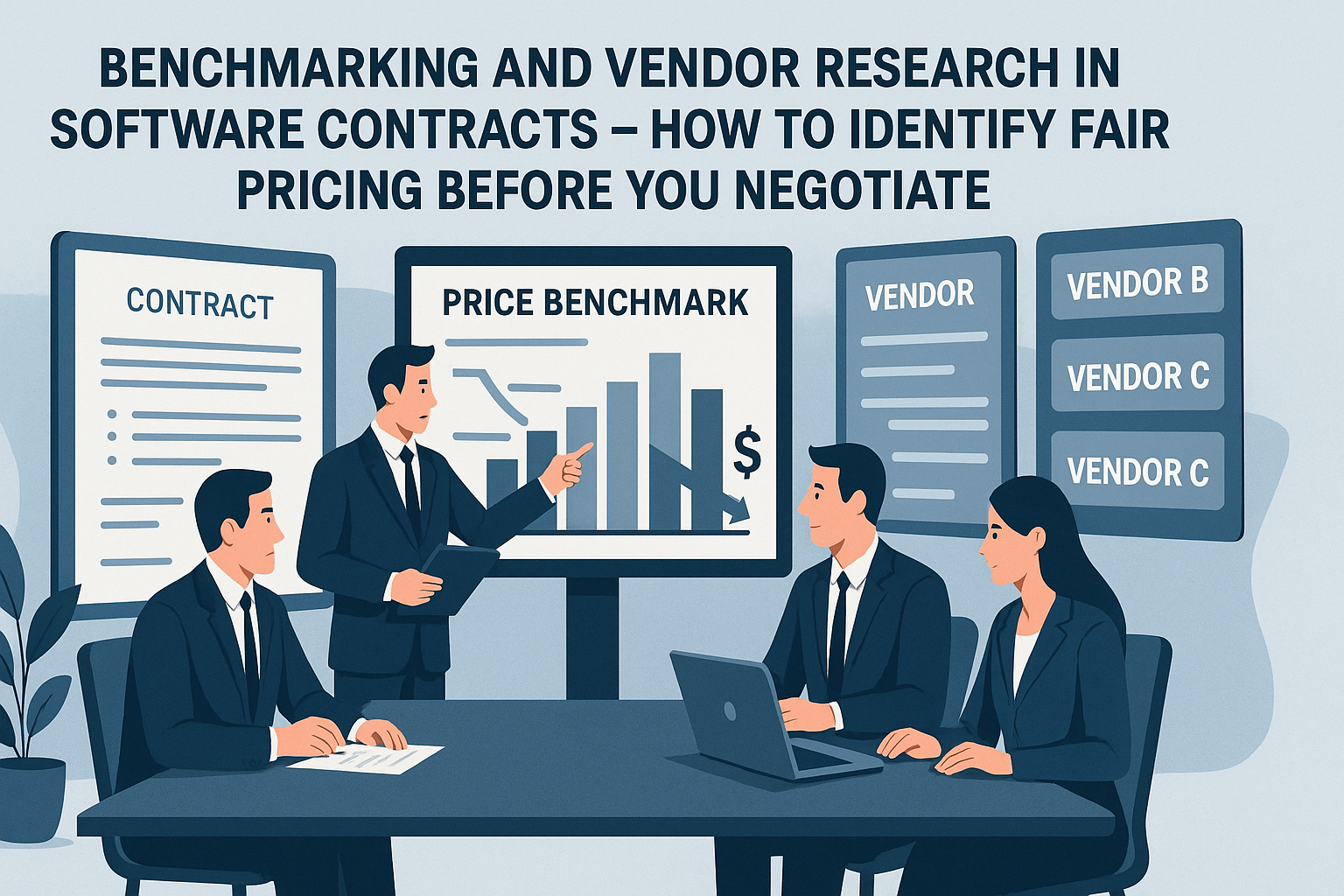
Always benchmark, Benchmarking and Vendor Research in Software Contracts – How to Identify Fair Pricing Before You Negotiate.
Step 5 – Create a Timeline and Decision Framework
Vendors often try to inject urgency into the process. Counter this by setting your own timeline and decision framework. Start with the end date (e.g., the contract renewal deadline or the desired go-live date) and work backward to schedule all key steps.
Important milestones to plan:
- Finalize requirements: Complete your internal requirements gathering by a set date.
- RFP/proposal review: Allow time to solicit and evaluate vendor proposals.
- Pricing validation: Set time to benchmark and validate vendor pricing against the market.
- Final negotiations and approval: Leave a buffer for final negotiation rounds and obtaining all necessary approvals.
By mapping out these steps, you prevent last-minute scrambling. You won’t be forced to fit the deal into a rushed timeline dictated by the vendor, because you’ve built in breathing room for careful evaluation at every stage.
Step 6 – Build a Benchmark-Informed Negotiation Plan
Don’t enter negotiations blind. Use benchmark data to anchor your expectations on pricing and terms. Research data such as:
- Market pricing: What similar companies are paying for the same or comparable software.
- Support & renewal rates: Typical support fees and the annual increases they see in the industry.
- License utilization: Your actual usage vs. what you’re paying for (to spot over-licensing).
- Discount levels: The kind of discounts vendors usually give for deals of this size.
Armed with these benchmarks, you keep the discussion fact-based. It’s much harder for the vendor to overcharge or mislead you when you can cite standard market numbers.
Step 7 – Develop Internal Messaging and Approval Rules
Before you meet the vendor, get your internal messaging and approval process straight so you present a united front.
Make sure everyone on your side agrees on:
- Official stance: The public position you’ll take on key points like pricing, volume, and terms (so everyone gives the same answers).
- Roles and decision authority: Who will speak on which topics and who is authorized to say “yes” or “no” in meetings.
- Approval requirements: Which concessions or changes require internal approval before you agree.
When your team is aligned and knows the game plan, it’s much harder for the vendor to find a weak spot or play divide-and-conquer with your stakeholders.
Step 8 – Identify Fallbacks and Scenario Plans
Even with thorough prep, surprises can happen. Identify a few fallback scenarios for the common “what ifs”:
- Longer term for lower price: Decide if—and how far—you’d extend the contract term for a big enough discount.
- Dropping modules to save cost: Know which optional features you could cut if you must reduce the price.
Having these pre-planned options means that if things get tough, you already know what trade-offs you can accept. You won’t have to make panicked decisions under pressure – you’ll respond with a strategy in mind.
Step 9 – Control the First Meeting
The first vendor meeting sets the tone. Use it to gather information and stick to your process—not to start haggling or making commitments.
Key things to do in the initial meeting:
- Confirm the scope: Make sure both sides agree on what’s being discussed (features, user counts, etc.), and don’t accept any price quotes upfront.
- Ask questions & uncover assumptions: Pose open-ended, data-driven questions (for example, “How did you arrive at that pricing?”) to gather information. Find out what assumptions the vendor might be making about your needs or timeline so that you can correct any false impressions early.
- Delay price talk: Avoid diving into pricing details or promising anything in this first meeting. Take notes and let them know you’ll review everything internally first.
By setting this tone in the initial call, you keep control of the agenda. The vendor will realize you’re prepared and methodical, which makes it harder for them to throw you off with early sales tactics.
Step 10 – Document Everything
Finally, keep a thorough written record throughout the negotiation. This includes:
- All communications: Save emails, proposals, and meeting notes, and track any changes in offers or terms.
- Internal takeaways: After each major discussion or milestone, note what was decided and any lessons learned (e.g., what tactic worked, where you gained leverage).
Detailed documentation prevents confusion and “he said, she said” scenarios later. It also becomes your negotiation playbook for the future. When the next renewal or software purchase comes up, you can review these notes to avoid past mistakes and repeat your successes.
Practical Example – From Reactive to Ready
Consider a quick comparison of two approaches to a software renewal:
Reactive negotiation: With only two months’ notice of the renewal, you have no time to prepare. You rush through meetings and end up accepting the vendor’s terms to avoid disruption.
Planned negotiation: You start preparing nine months in advance. You benchmark prices, align your team internally, and set fallback options. By the time you engage the vendor, you have data on hand and no urgency—you control the timeline.
Outcome difference: The planned approach often yields a 15–25% lower cost and a contract aligned to real usage. The reactive approach usually means higher costs and a deal skewed toward the vendor’s terms.
This example shows how planning isn’t just paperwork – it directly affects results. The proactive approach not only saves money but also results in a contract tailored to your needs, rather than whatever the vendor can get away with.
Common Planning Mistakes
Common planning mistakes include:
- Assuming renewal terms will automatically match your last deal.
- Starting preparation late and following the vendor’s timeline.
- Allowing the vendor to set the agenda or frame the issues.
- Skipping independent price and terms benchmarking.
- Failing to define a clear walk-away point.
Each of these pitfalls can result in lost leverage or unnecessary overspending. Thorough planning helps ensure you stay in control and get the best deal possible.
Benefits of a Structured Negotiation Plan
A disciplined negotiation plan delivers more than cost savings. It also means:
- ✅ Predictable timelines and approvals: You know the process and who must sign off, with fewer surprises.
- ✅ Fewer last-minute escalations: Good planning catches issues early, so there are fewer last-minute crises.
- ✅ Clear cost baselines: You have set expectations for pricing and decision logic, making choices easier.
- ✅ Measurable results: You can clearly see the savings achieved and end up with a stronger, fairer contract.
In short, planning equals control—and control equals leverage in software negotiations.
Final Takeaway
Effective software negotiation isn’t about being combative; it’s about being prepared and timely. With the right planning, you define what you need, when you need it, and how you’ll hold the line on those needs.
Without a solid plan, every conversation with a vendor can become a reactive scramble on their terms. With a solid plan, even a large renewal turns into a managed, predictable process on your terms.