Why Software Contract Negotiation Is Now a Board-Level Issue
Software renewals are no longer just IT housekeeping — they’ve become major financial events.
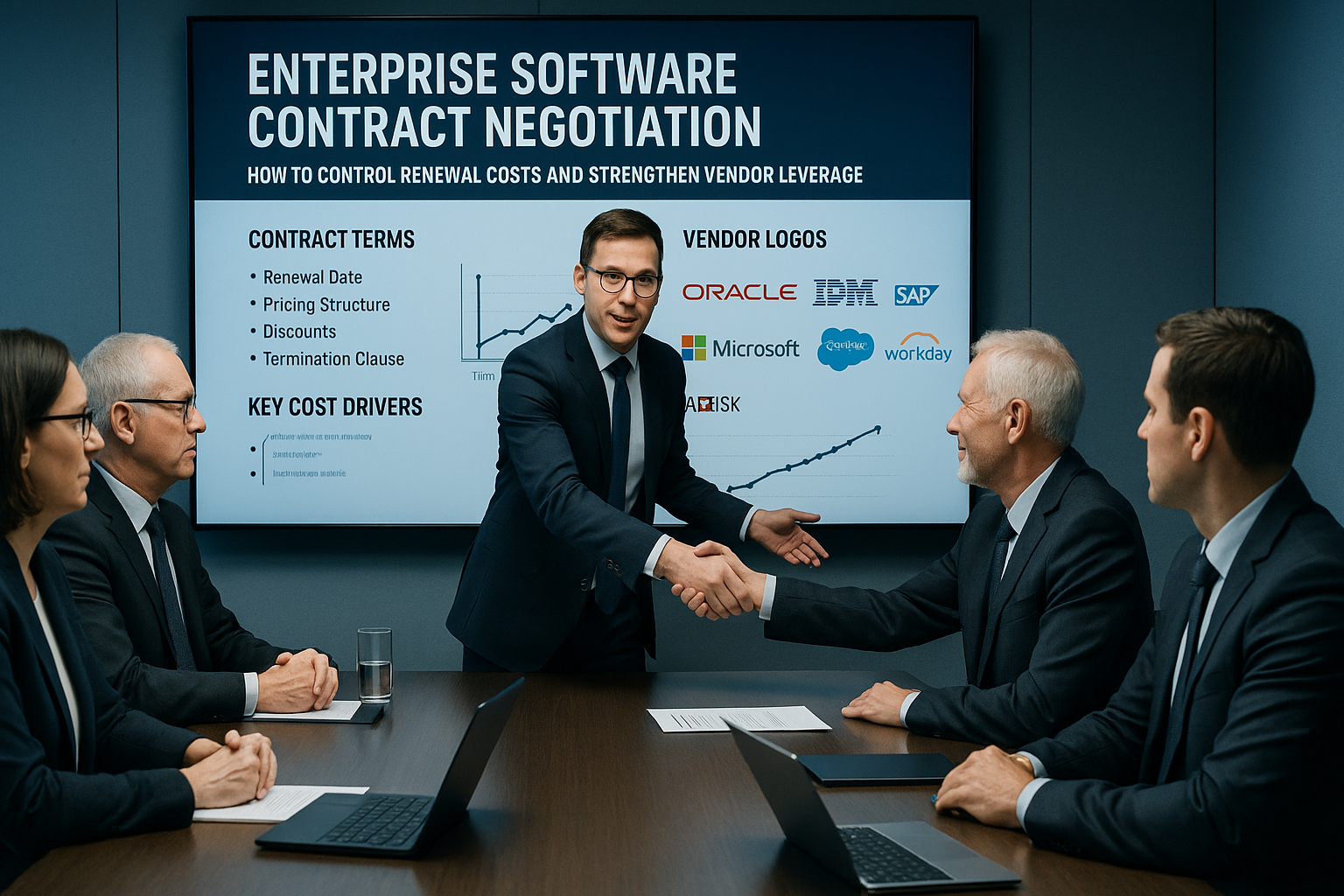
A big contract renewal can hit the budget by millions, so CIOs and CFOs now brief the board on these deals. Vendors have learned to bundle products, shift licensing metrics, and introduce “growth pricing” that quietly ratchets costs upward over time.
It’s not uncommon to see renewal quotes come in 10–20% higher than last time with no added value. These increases persist because vendor contracts are often designed for opacity, making it hard to pinpoint where extra costs creep in.
Negotiation isn’t just about price — it’s about visibility and control. Treating renewals as strategic financial events exposes the hidden tactics vendors use to pad their margins.
In short, enterprise software negotiation is now a board-level concern because it directly impacts spend and demands proactive cost management.
The Source of Negotiation Power
Real leverage comes from preparation and information, not personality. Before you sit down with a software vendor, make sure you have three critical assets:
- Market benchmarks: Know what similar companies pay. Solid pricing data lets you set credible discount targets and call the bluff on “special” offers.
- Usage data: Know what you actually use versus what you’re paying for. Identify unused licenses or oversized packages that you can eliminate or scale down.
- Alternatives: Have a Plan B. Even if you won’t switch, researching other vendors or options (such as delaying an upgrade, using third-party support, etc.) gives you leverage. The mere possibility of change resets the tone of the discussion.
Negotiations built on guesses or vendor-fed assumptions usually end with you overpaying (and maybe even feeling grateful for it). In reality, the strongest negotiation power comes from hard data and thorough preparation.
Benchmark Reality – What Enterprises Actually Pay
Every rep claims you’re getting a great deal, but benchmarks cut through that noise. Here’s what enterprises commonly pay versus top-tier negotiated discounts for major vendors:
| Vendor | Common Discount Range | Negotiated (Top-Quartile) | Notes |
|---|---|---|---|
| Oracle | 35–45% | 60–65% | High variability; audits can provide leverage |
| Microsoft | 20–25% | 30–40% | True-up accuracy drives results |
| Salesforce | 25–35% | 40–50% | Volume and timing dominate |
| SAP | 10–15% | 25–30% | Maintenance control is key to savings |
| Cisco | 15–25% | 30–35% | Bundle alignment affects discount depth |
These figures reflect real negotiated outcomes, not list prices. The takeaway: discounts are earned, not given. Vendors won’t volunteer their best price, so leverage your data and competitive options to reach the top quartile.
How Vendors Engineer Cost Growth
Software publishers use complexity to protect their margins, building in cost growth that buyers might not notice at first.
Common tactics include:
- Product bundling: Forcing you to buy a suite of tools (many you don’t need) to get the one you do.
- Metric inflation: Changing the licensing model (e.g., from per-user to usage-based) so costs rise automatically as your usage grows.
- Audit threats: Using the threat of license audits to pressure you into buying more or expanding your contract.
- Support tie-ins: Requiring costly maintenance or new licenses to continue support for legacy systems you rely on.
Each tactic adds complexity that favors the vendor. Your job is to spot these maneuvers and push back on anything that doesn’t add value. Question every unfamiliar fee or term, and refuse to pay for bells and whistles that your organization isn’t using.
Preparation determines 70% of the Outcome.
If negotiation starts when you get the quote, you’re already on the back foot. Most of your success is determined by what you do beforehand.
Start early with:
- Full usage audit: Inventory all licenses and usage to find what’s underused or unused. These flags waste you can cut before renewing.
- Baseline and forecast: Set a baseline of current spend and project true needs for the next term. Define a target renewal cost based on that, rather than accepting the vendor’s assumed growth.
- Cross-team alignment: Align IT, procurement, finance, and business leaders on what the company really needs and what it’s willing to spend. A united front prevents divide-and-conquer tactics.
- Clear targets and walkaways: Establish your ideal outcome (e.g., a 40% discount or a cost cap) and your walkaway point in advance. Knowing your boundaries means you won’t cave under last-minute pressure.
Thorough preparation builds credibility. Arrive at the table data-ready and confident, and the vendor will see you’re not an easy target for a high-priced upsell.
Using Competitive Pressure Without Switching
Switching is painful, but evaluating competitors can still give you leverage. Even if you plan to stay with your current vendor, consider these tactics:
- Cloud alternatives: Mention that you’ve benchmarked AWS vs. Azure for your workloads. It signals you won’t hesitate to migrate if the incumbent’s deal isn’t competitive.
- Third-party support: Obtain a quote for independent support on a major system (Oracle, SAP, etc.). Showing you could drop the vendor’s support pressures them to cut their maintenance fees.
- Other software options: Benchmark other tools (Zoom vs. Teams, Slack vs. Salesforce, etc.) before renewing a big contract. If the vendor knows you have alternatives, they must sharpen their offer.
Introducing competition doesn’t mean you have to switch — it forces the vendor to sharpen their deal. Remind them that your business must be earned, not taken for granted.
Multi-Year Agreements – Predictability or Trap?
Multi-year contracts offer stability, but they can also bake in cost increases. Watch out for:
- Escalation clauses: Automatic annual price hikes (for example, 3–5% per year) that compound over time.
- Usage floors: Minimum spends or user counts that increase each year, forcing you to pay more even if actual usage doesn’t.
- Auto-renewal traps: Notice periods or evergreen clauses that, if missed, lock you in for extra years at preset terms.
A multi-year deal is only smart if it truly locks in a great rate and flexibility. Otherwise, it may just guarantee the vendor steady increases while you’re stuck with the bill. Always scrutinize the long-term cost trajectory and the exit strategy if needed.
The Role of Benchmarking in Modern Negotiation
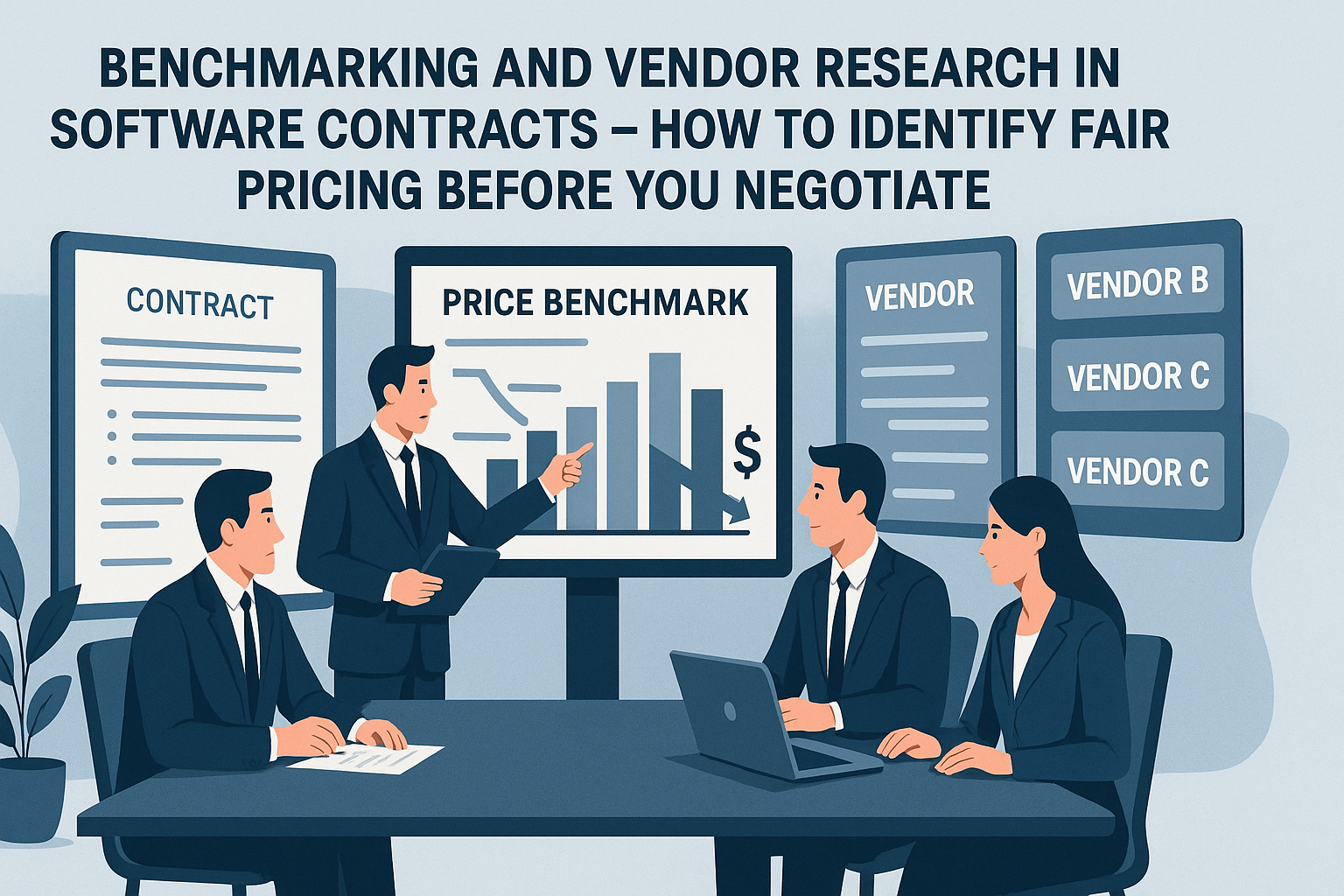
Benchmarks have become a negotiation weapon, not just a reference. When you can say, “Organizations like ours got 40% off deals this size,” the discussion shifts to hard data. You force the sales team to justify their price against market reality.
In essence, benchmarks make negotiation a data-driven exercise and strip the vendor of its information advantage. It’s one of the most powerful ways to tilt a software negotiation in your favor.
Managing Renewal Drift
“Renewal drift” is when software costs quietly outpace the value you get. It happens through unnoticed add-ons, unused licenses, and small uplifts that accumulate over time. To prevent this, treat renewals as an ongoing discipline:
- Regular reviews: Audit key contracts at least once a year (and more often if needed) to catch cost creep early.
- Assign ownership: Give someone responsibility for each major software agreement to monitor usage and spending, so nothing falls through the cracks.
- Renewal calendar: Track all contract end dates, starting 6–12 months out, so you’re never blindsided by a renewal deadline or auto-extension.
- Usage checks: Twice a year, compare your paid entitlements to actual usage. Identify any excess licenses or services well before negotiations.
Remember, cost control is a continuous process, not a one-time event. By actively managing your software assets, you’ll spot issues early and enter each renewal with a plan to optimize value.
Structuring a Negotiation Framework That Works
Treat enterprise software negotiations as a repeatable process, not an ad hoc fight. A strong framework covers four core disciplines:
- Visibility: Centralize all software contract details (agreements, spend, renewal dates) in one place. You can’t manage or negotiate what you can’t see.
- Preparation: Gather your data (usage, spend history, benchmarks) and set clear objectives well before the renewal. Know what you want and what you won’t accept.
- Execution: Lead negotiations with a coordinated team and a clear plan. Control the agenda, stick to your timeline, and document all offers and concessions.
- Governance: After the deal, capture lessons learned. Update your playbook so each negotiation informs the next and you continuously improve.
In short, make negotiation a continuous improvement cycle rather than a last-minute scramble. Each time you run the play, you get better at it.
Real-World Results From Structured Negotiation
What can you expect from a disciplined, data-driven negotiation approach? Companies that embrace these practices often report:
- 10–30% savings on software renewals in the first cycle of using a structured strategy.
- 50% fewer audit penalties or surprise “true-up” costs, thanks to clearer contracts and proactive monitoring.
- 25% faster negotiation cycles, thanks to thorough prep and defined goals that streamline the back-and-forth with vendors.
These results are the direct payoff for taking control of the process. By replacing guesswork with strategy, you consistently secure better pricing and terms.
Common Negotiation Mistakes
Even experienced teams slip up. Beware of these common mistakes in software vendor negotiations:
- Taking the first offer —“Standard” discounts or the initial quote — almost always leaves money on the table. Always counter.
- Following the vendor’s timeline: Rushing to close by the vendor’s quarter-end can make you concede more. Set your own timeline instead.
- Internal misalignment: If IT, procurement, and finance aren’t unified, expect confusion and last-minute concessions. Align internally before you negotiate.
- Not reading the fine print: Hidden escalators and tricky renewal terms can wipe out savings later. Scrutinize the contract details to identify potential future cost traps.
- Overreacting to audits: An audit notice can spook companies into quick, costly deals. Handle it calmly and strategically, just as you would with a renewal.
Each mistake above can cost you money or leverage. The good news is that with foresight and discipline, all of them are avoidable.
Building Internal Negotiation Capability
You can hire experts for help, but you can’t outsource accountability. To truly control software costs, build an internal negotiation capability.
Develop a playbook that specifies:
- Data collection: What information to gather before each negotiation (usage metrics, current contract terms, market benchmarks, etc.).
- Roles and responsibilities: Who leads the negotiation, who approves deals, and who must be consulted. Clear roles prevent internal confusion during negotiations.
- Success metrics: How you’ll measure a good outcome — for example, percentage saved off the initial quote, cost-per-user improvements, or added flexibility in terms.
By institutionalizing negotiation knowledge, you ensure each renewal makes you stronger. Over time, your team’s expertise will compound, leading to bigger savings and better terms with each deal.
Related articles
- Planning and Requirements for Software Negotiations – How to Prepare for Control and Leverage
- Benchmarking and Vendor Research in Software Contracts – How to Identify Fair Pricing Before You Negotiate
- Negotiating Licensing Terms and Conditions – How to Avoid Costly Software Contract Pitfalls
- Renewal and True-Up Strategies in Software Agreements – How to Turn Renewals Into Savings Opportunities
- Post-Contract Vendor Management and Compliance – How to Maintain Control After Signing
Final Takeaways
- Complexity favors vendors; simplicity wins negotiations. Focus on what you need and strip out the rest.
- Benchmarks are your reality check. Go in armed with market pricing data to ground your discussions.
- Early prep beats late desperation. Starting negotiations months in advance with facts and strategy trumps any end-of-quarter scramble.
- Negotiation is strategic, not just procurement. It’s a core part of financial strategy and cost control, not just a paperwork exercise.