Why Vendor Lock-In Is So Dangerous
Lock-in isn’t just a technical issue — it’s a commercial trap. Without a proactive cloud vendor lock-in strategy, once your workloads, data, and teams are deeply tied to one cloud, your ability to negotiate vanishes. Migrating out becomes expensive, disruptive, and slow.
That’s exactly how vendors like it — dependence gives them pricing power. In the end, lock-in erodes your leverage and can turn long-term customers into captive revenue streams.
Read our strategic guide, Cloud Negotiation Strategies – How to Control Spend and Protect Flexibility in Cloud Contracts.
How Cloud Lock-In Happens
Lock-in doesn’t happen overnight. It builds gradually through small decisions and dependencies. Common causes include:
- Proprietary services and formats: Using vendor-specific APIs or data formats that aren’t supported elsewhere.
- Closed integrations: Building workflows limited to one provider’s ecosystem.
- Sticky discounts: Long-term discounts (like reserved instances) that make switching providers costly.
- Weak contracts: No exit clauses or cloud portability clauses in contracts, leaving you without guaranteed data migration rights.
- High transfer costs: Steep data egress fees that make migrating large datasets impractical.
Each “convenience” can deepen your dependence and, over time, add up to a serious barrier to change.
Recognizing the Financial Signs of Lock-In
You’ll know you’re locked in when financial red flags appear. Renewal discussions may lack any competitive bids. The vendor could refuse better discounts, knowing you’re stuck, and call any multi-cloud idea “too costly.” Pricing might even become less transparent over time.
In short, lock-in removes optionality — and optionality is the foundation of leverage. If you can’t credibly say “we have other places to go,” your bargaining power is gone.
Negotiating Portability and Exit Rights
Avoiding lock-in starts with cloud contract negotiation — make portability a priority in every deal. Insist on terms that guarantee:
- Data export rights: You can retrieve all your data in open, machine-readable formats whenever needed.
- Reasonable egress fees: Fees for moving data out are low, capped, or offset by credits.
- Migration support: The vendor provides technical help if you migrate away.
- Post-termination access: A grace period (60–90 days after contract end) to retrieve your data and systems.
This upfront effort in cloud portability negotiation pays off later. By building an explicit cloud exit strategy into your contracts, you keep control firmly in your hands.
Read how to negotiate Negotiating Cloud Service Agreements (IaaS/PaaS) – How to Secure Cost Predictability and Value From Your Cloud Contracts.
Using Multi-Cloud to Maintain Leverage
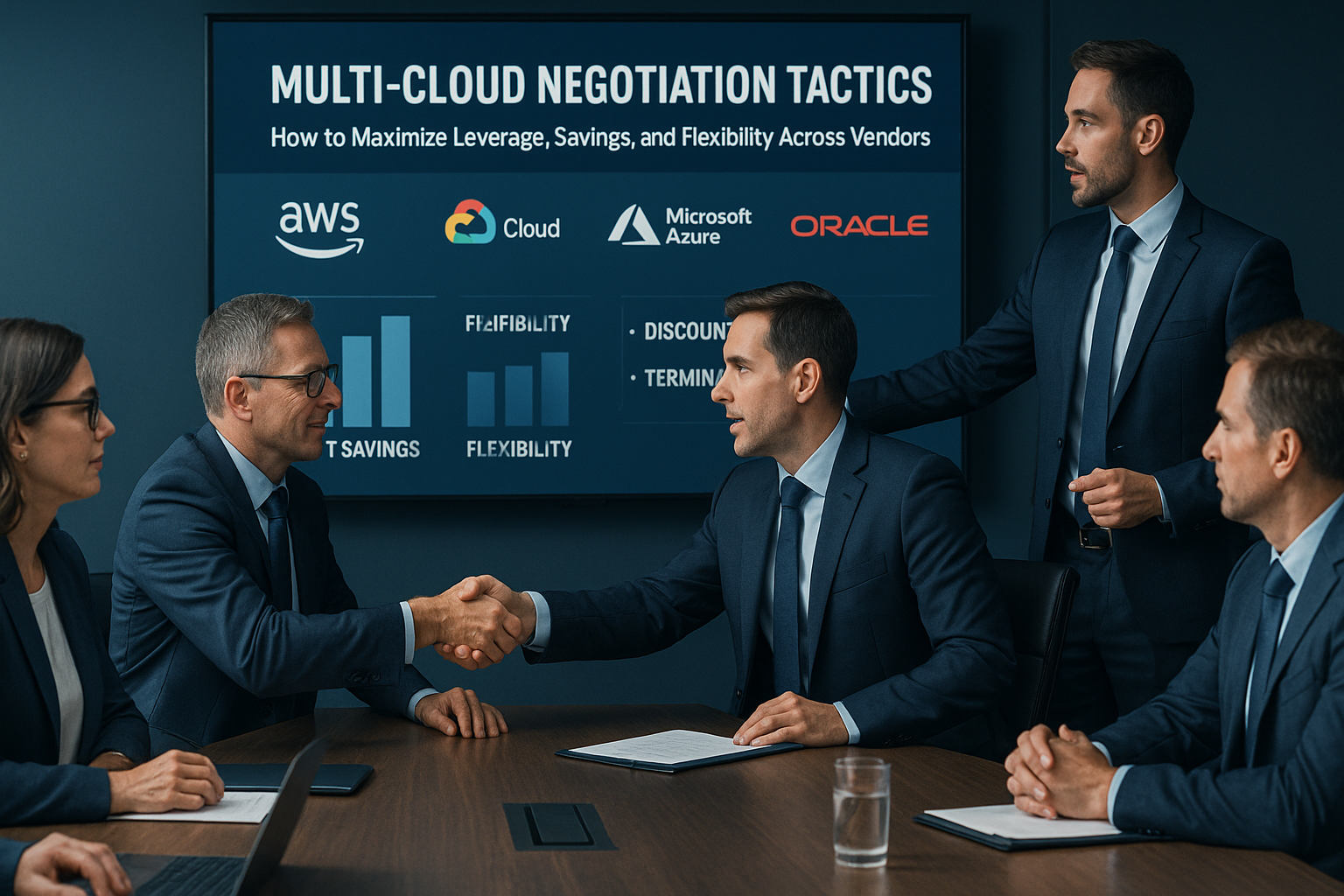
You don’t have to split everything evenly across clouds to gain leverage — you just need credible options. Even moving 10–20% of your workloads to a secondary provider establishes multi-cloud flexibility. That alone reminds your primary vendor that you have alternatives.
In renewal talks, mention the workloads you run elsewhere to make it clear you’re not 100% dependent. When vendors know they’re replaceable, they tend to become much more reasonable on pricing and terms.
In essence, a small multi-cloud footprint can translate into outsized negotiating power by keeping real alternatives on the table.
Read how cloud service level agreements work, Cloud Service Level Agreements and Governance – How to Enforce Accountability and Protect Uptime.
Designing Architectures for Portability
The best defense against lock-in is designing your systems to be portable from the start. Key principles include:
- Containerize applications: Use containers and orchestration (like Kubernetes) so your workloads can run on any cloud with minimal changes.
- Standardize data formats: Keep data in common, portable formats (CSV, JSON, Parquet, etc.) rather than proprietary formats tied to a single vendor.
- Avoid one-way tools: Be cautious with cloud-specific frameworks or managed services that have no equivalents outside that provider’s platform.
- Use abstraction layers: Implement API abstraction or multi-cloud management tools to decouple your application from any single provider.
By designing for transferability and openness, switching providers (or operating in multiple clouds) becomes a practical option, not a painful last resort. It’s far easier to build this flexibility in early than to retrofit it later.
Benchmarking Vendor Portability Practices
Not all cloud providers are equal when it comes to lock-in tactics or portability support. For example:
- AWS: Rich ecosystem and tools, but high data exit fees and many proprietary services that can increase lock-in.
- Azure: Strong hybrid-cloud integration and sometimes offers migration credits, but watch out for Azure-specific tech that doesn’t translate elsewhere.
- Google Cloud: Embraces open-source standards and multi-cloud management, though you should still vet any Google-only services for portability.
Knowing these nuances helps you decide where to place workloads. If one vendor charges heavily to move data out, avoid putting your biggest databases there. If another is more open, you can confidently use their advanced services. Align your deployment choices and contract terms with these differences to preserve maximum freedom.
Using Exit Clauses as Negotiation Leverage
Exit rights in your contract aren’t just about leaving — they’re also a bargaining chip while you stay. If a vendor knows you can walk away cleanly, they treat you differently.
They’ll think twice before taking a hard line on:
- Renewal pricing: You’re likely to get better discounts or at least avoid price hikes, since they know you could take your business elsewhere.
- Service quality and credits: They’ll work to keep you happy, perhaps offering credits or extra support so you aren’t tempted to look around.
- Commitment flexibility: You may get more lenient terms on usage commitments or growth, because the provider doesn’t want rigid terms to push you away.
- Migration assistance: Paradoxically, a vendor aware of your easy exit might supply tools or support that make leaving easier (to encourage you to stay longer).
In practice, strong exit clauses mean you might never need to use them. Simply knowing you have a solid exit option shifts every negotiation in your favor.
Managing Data Mobility
Data mobility is the backbone of cloud freedom — if your data is portable, you are portable. Focus on making data movement easy:
- Predictable transfer costs: Negotiate clarity on data egress fees. Large migrations should be free or capped to prevent cost surprises.
- Export-friendly services: Favor services with built-in data export tools, and regularly test that your exports are usable off the platform.
- External backups: Keep periodic backups in a neutral format or in a separate environment to demonstrate you can restore data outside the original cloud.
- Document dependencies: Maintain updated documentation of data schemas, pipelines, and dependencies so you can re-create your environment elsewhere if needed.
By making data extraction a routine part of operations, leaving a provider becomes far less daunting.
Governance and Continuous Validation
Lock-in risk can creep back in as your cloud usage evolves, so continuous governance is key. Conduct periodic reviews (e.g., quarterly or biannually) to keep lock-in in check:
- Portability audits: Spot any new workloads that rely too much on proprietary services. If a team is using a cloud-specific tool unnecessarily, plan to shift to a neutral option before it grows further.
- Exit drills: Occasionally, simulate migrating a service or dataset to another platform. These drills reveal hidden obstacles and ensure your exit processes work when the stakes are low.
- Track switching costs: Keep an updated estimate of what switching providers would entail (time, money, effort). If that cost is rising, find out why — it could signal growing dependencies to address.
- Contract vs. reality: Ensure your operations uphold the freedoms promised in your contracts. For example, if your contract guarantees on-demand data export, verify your team knows how to perform that and has the tools ready.
Regular validation ensures your theoretical options remain practical, and it’s much better to find a lock-in issue during a review than during a crisis.
Renewal Timing and Leverage Windows
Renewals are when vendors might try to exploit your dependence on them. Turn renewal into an opportunity by preparing well in advance:
- Benchmark elsewhere: About 6 months before renewal, compare your workloads’ costs with other providers. Use this data to push for better terms if your current deal isn’t competitive.
- Audit dependencies: Pinpoint any proprietary services you’re heavily using that would complicate a move. Address them early (e.g., replace that unique database with an open-source alternative) to keep your options open.
- Reconfirm exit options: Double-check your exit clause and ensure you have recent backups of critical data. Knowing you could leave on short notice boosts your confidence in negotiations.
- Signal your options: Make it clear to your vendor that you’re exploring alternatives. Talk to other providers, get quotes or demos — show that renewal is not automatic and they need to earn your business.
5 Actionable Cloud Lock-In Prevention Strategies
To wrap up, here’s a quick checklist of five strategies to avoid vendor lock-in:
- Start with Contract Flexibility: Make portability and exit terms (your cloud exit clauses) non-negotiable in every cloud contract.
- Design for Transferability: Build on open standards and avoid one-way proprietary tools from the start.
- Benchmark Regularly: Compare cloud providers regularly on cost and performance to keep your options open and vendors honest.
- Rehearse Exits: Periodically practice migrating a workload or exporting data. These drills prove your cloud exit strategy works in real life.
- Stay Multi-Vendor Aware: Even if you primarily use one provider, maintain some presence or skills in others. That ongoing multi-cloud flexibility is your safety net for leverage.
Avoiding lock-in isn’t about constantly switching providers; it’s about always being able to switch if needed. With smart planning and vigilant habits, you can enjoy the benefits of cloud innovation while preserving your leverage, portability, and pricing power.